
Sichuan Daily: Sichuan Archaeology Goes to the Western Seas
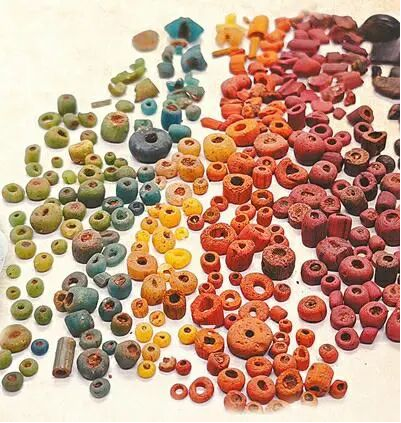
Glass beads unearthed from the Pabalugala site.
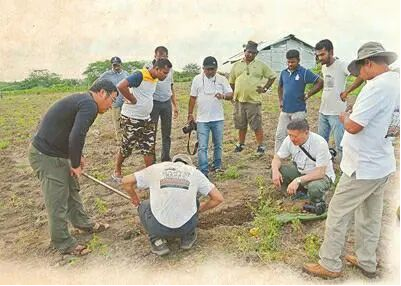
Archaeological survey site at the Mantai Port ruins.
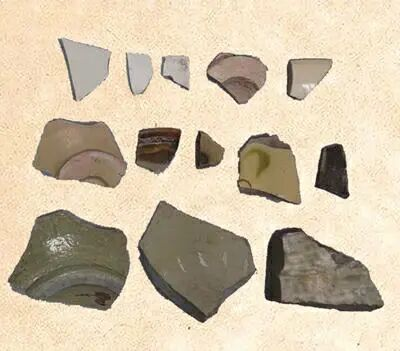
Chinese porcelain and other artifacts unearthed during the 2019 excavation of the Mantai Port site.
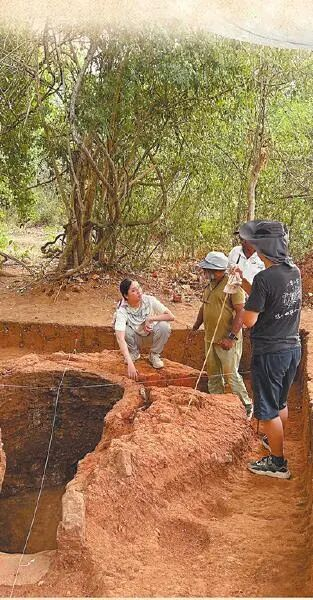
Chinese and Sri Lankan team members at the excavation site. Photos provided by the Center for Archaeological Sciences, Sichuan University.
Sri Lanka is a shining pearl in the Indian Ocean and a crucial node on the Maritime Silk Road. From the time of the Eastern Jin Dynasty monk Faxian, who practiced Buddhism here, to the Ming Dynasty navigator Zheng He, who erected the Galle Trilingual Inscription during his voyages to the Western Seas, friendly exchanges between China and Sri Lanka have endured for over a millennium.
Since 2018, archaeologists led by faculty and students from the School of Archaeology and Museology at Sichuan University have been working here. At the Mantai Port ruins, the earliest rising famous ancient port in the Indian Ocean, they explore its developmental lineage; at the Pabalugala site in the North Western Province of Sri Lanka, they uncover the production process of the "hard currency" of the Maritime Silk Road—Indo-Pacific glass beads. Years of continuous archaeological work have unveiled Sri Lanka's prosperous past in the Maritime Silk Road trade and pieced together a vivid picture of ancient Chinese maritime ventures.
Buried Beneath the Soil: Marks of a Thousand-Year Diplomatic Relationship
In December 2025, Associate Professor Fan Jianan of the School of Archaeology and Museology at Sichuan University, having returned from Sri Lanka, remains busy. Aside from daily teaching and laboratory supervision, she is engaged in organizing statistics, drafting, and photography for materials from this year's excavation.
At first glance, Fan Jianan's work seems unrelated to Sri Lanka. Why travel far across the Western Seas to conduct archaeological work on an island nation in the Indian Ocean? The answer lies in the thousands of years of close interaction between China and Sri Lanka.
Sri Lanka was recorded in ancient Chinese texts as the Lion Kingdom (Shizi Guo or Sengjialuo Guo). As early as the Eastern Jin Dynasty, when the high monk Faxian traveled to Tianzhu (India) to seek the Dharma, he chose the sea route for his return, stopping in Sri Lanka to visit temples and study. Faxian authored the Foguoji (Record of Buddhist Kingdoms), which recorded local customs and became an important historical source for understanding Sri Lankan history.
"This cultural exchange a thousand years ago opened the prelude to close communication between the two countries," Fan Jianan explained. Historical records indicate that from the 5th to the 8th centuries, the Sinhala Kingdom sent tribute to China, and many Chinese monks traveled there for exchange. The Great Tang Records on the Western Regions recorded the prosperity of Buddhism in the Sinhala Kingdom at that time: "Beside the king's palace is the Vihara of the Buddha's Tooth, several hundred feet high, adorned with pearls and precious gems..."
During the Ming Dynasty, Zheng He made seven voyages to the Western Seas, bringing with him the Galle Trilingual Inscription commissioned by the Yongle Emperor, Zhu Di. This stone stele, inscribed in Chinese, Tamil, and Persian, records Zheng He's fleet paying homage to sacred sites and offering alms, reflecting the coexistence of different ethnicities, languages, and religions on the Maritime Silk Road. Today, the stele is a treasure of the Colombo National Museum and is inscribed in the UNESCO Memory of the World Register.
A Maritime Silk Road connects China and Sri Lanka. Chinese porcelain and silk were widely popular in Sri Lanka, while China imported local products such as spices and gemstones. After the founding of the People's Republic of China, the two countries broke through the economic blockade of Western nations in 1952 by signing the "Rice-Rubber Pact," focusing on the exchange of rice for rubber, which became a celebrated story in the history of friendly cooperation between the two nations.
Under the guidance of the Belt and Road Initiative, the Department of Archaeology at the School of History and Culture (now the School of Archaeology and Museology) at Sichuan University signed a memorandum of cooperation for archaeological research with the Department of Archaeology at the University of Kelaniya, Sri Lanka. On December 8, 2017, the two parties formally signed an agreement to jointly conduct archaeological surveys and excavations at the Mantai Port site.
In Fan Jianan's view, excavating a port in a foreign land is of extraordinary significance. "China and Sri Lanka have had close historical exchanges, and many traces are buried in the soil. Furthermore, Sri Lanka was a trade hub on the Maritime Silk Road, maintaining close ties not only with China but also with Western and Persian civilizations. The archaeological findings here are likely to vividly reflect the exchange and dialogue between different civilizations."
Buried Within the Ruins: The Past Glory of the Maritime Silk Road
Where is the most valuable place to dig in Sri Lanka? As the Chinese site manager of the joint archaeological team between Sichuan University and the University of Kelaniya, Fan Jianan and her colleagues extensively visited local museums, consulted historical documents, and after several discussions with the University of Kelaniya team, finally selected the Mantai Port site.
Mantai Port is located at the northwestern tip of Sri Lanka, adjacent to the Mannar Strait and facing India across the sea. It is a veritable choke point for maritime traffic. With the metropolitan capital of Anuradhapura in its hinterland, it possessed unique commercial advantages. From 337 BC to 1017 AD, it held the position of Sri Lanka's premier maritime trade port.
Its profound historical accumulation has attracted archaeologists from various countries to conduct excavations for over a century. Regrettably, while these archaeological efforts had their own academic goals, they did not resolve many issues regarding the founding time, periodization, and layout of the Mantai Port site.
After the joint archaeological team stationed itself at the site, the primary task was to locate the old trenches from previous excavations to deploy areas for drilling surveys.
Over the years, the surface of the site had been covered by heavy vegetation, making traces of the ancient city walls difficult to discern. The southwestern part of the site was occupied by a large area of residential housing. Using a temple in the center of the site as a reference, the team carefully surveyed the surrounding area and found that previous archaeological work had mostly focused on the southern part of the site, leaving a lack of basic understanding of the large northern area. Ultimately, both parties decided to conduct drilling in the northern part of the site, where the layout was still unclear.
Drill holes were densely laid out every 10 meters within the site. The Luoyang shovel, commonly used in Chinese archaeology, performed surprisingly well at the Sri Lankan site. The drilling results showed that when the probe reached a depth of about 1.2 meters, some holes brought up artifacts with dating significance. These included South Asian Black and Red Ware from the 8th to 10th centuries and Chinese celadon shards from the 9th to 10th centuries; glass fragments of unknown date, suspected to be from West Asia, were also found. In the intervals between drilling, the joint archaeological team also conducted foot surveys around the city walls, confirming the distribution of the Mantai Port walls.
Once the formal excavation began, the abundance of unearthed artifacts pleasantly surprised the team. Deeply buried Indian pottery, potentially polished black pottery from northern ancient India, dated back as early as 600 BC. These polished black pottery pieces indicate that the island of Sri Lanka had already established some form of contact with India via Mantai Port as early as the 6th century BC.
The site also yielded a large amount of Chinese ceramics, including Yue ware celadon, Guangdong celadon, Changsha ware green-glazed polychrome porcelain, as well as white porcelain fired in northern kilns such as Xing, Ding, and Gongyi, and even very small quantities of white-glazed green-decorated ware and Sancai (tricolor) ware. The earliest date back to the Mid-Tang period, with the majority concentrated in the Late Tang and Five Dynasties periods. These ceramics demonstrate the characteristics of the ceramic trade during the first peak of Chinese ceramic exports from the 9th to the 10th centuries.
Fan Jianan explained that large-scale export of Chinese ceramics began in the 9th century, and discoveries of Chinese porcelain prior to the 9th century in regions west of the Indian Ocean are extremely rare. "The Mid-Tang Gongyi kiln white porcelain and Sancai ware unearthed in this excavation provide crucial evidence for studying the start time of Chinese ceramic exports to the Indian Ocean region."
As the excavation continued, Islamic glazed pottery was also frequently found, along with pottery suspected to belong to the Roman-Byzantine system. These unearthed ceramic artifacts embody a complex cultural background, broadly covering the entire Mediterranean-Indian Ocean-Pacific region. Various glass, stone, and shell artifacts also suggest that Mantai Port was likely a site for the production and processing of beads. The site also revealed various raw gemstone materials, which were likely important trade goods exported from Sri Lanka.
The archaeological results from the Mantai Port site confirm, from the perspective of artifact origins, Mantai's status as a hub in East-West trade. The rich artifacts display the process of commodity trade, encapsulating the millennium-long prosperity of the Maritime Silk Road and providing crucial physical evidence for the history of Sino-foreign transportation and Maritime Silk Road archaeology.
Excavation Site Reveals South Asian Glass Bead Production Base
In the ancient Indo-Pacific maritime trade system, in addition to spices and gemstones, Indo-Pacific glass beads were also significant trade items exported by Sri Lanka. The Pabalugala site in the Kurunegala District of the North Western Province, Sri Lanka, is famous in South Asia for producing Indo-Pacific glass beads, with a history dating back from the 3rd century BC to the 10th century AD.
In 2024, a joint archaeological team composed of Sichuan University, the Sichuan Provincial Cultural Relics and Archaeology Research Institute, and the Chengdu Institute of Cultural Relics and Archaeology conducted work at this site. Leading university students in on-site archaeological training, they hoped to clarify the cultural nature, chronological sequence, and production technology of the site, and even trace how these beautiful beads entered the vast regions of China through trade networks.
Summer in Sri Lanka brings temperatures as high as 40°C. The archaeological team built simple sheds at the site and buried themselves in work in the trenches every day starting at 9 AM. The site was an hour's drive away, so lunch consisted of cold meals brought in the morning. Fortunately, wild elephants could occasionally be seen strolling leisurely not far from the site, and other animals would sometimes dash by; thanks to the local tea-drinking habit, there were two extra tea breaks a day, adding moments of joy for the team members amidst the scorching sun.
The biggest surprise came from the rich archaeological discoveries. In 2024, the team conducted a geophysical survey of the surface and discovered nearly 50 kilns. "Such a scale is massive. We speculate that this might be one of the largest glass bead production sites in South Asia," said Fan Jianan.
Formal archaeological work proceeded successively in 2024 and 2025, and kiln ruins were quickly discovered as expected. Notably, the three kilns cleared during excavation presented two different forms, likely corresponding to two different stages of glass bead manufacturing—artisans might have first smelted raw materials like quartz sand into primary glass blocks, and then used another type of kiln to draw the semi-finished glass into tubes, finally cutting them into small beads.
Important artifacts, including tens of thousands of Indo-Pacific monochrome glass beads and glass frit, confirm that this site had developed into a specialized, large-scale glass bead production center between the 2nd and 5th centuries AD.
Simultaneous with the excavation, team members conducted a mineral source survey. About one kilometer in a straight line from the site, the team found quartz deposits and veins. "This fully reflects the wisdom of the ancients in choosing Pabalugala as a kiln site," Fan Jianan explained. The site is located by a small river, with nearby villages providing labor, and a large river leading to the capital at the time, connecting to Mantai Port via other waterways. In this way, these local specialties could be sold to other regions of Sri Lanka and overseas with minimal cost.
In recent years, similar glass beads have been unearthed in Hepu, Guangxi, and Chengdu, Sichuan in China. They may have come from this site or other glass bead production bases in South Asia. The excavation and research at Pabalugala not only help systematically reveal the production and technological processes of the glass bead industry and enrich the understanding of ancient South Asian glass bead manufacturing technology, but also provide crucial evidence for research into the origins and technological diffusion of glass bead technology in the ancient world.
The "going global" of Sichuan archaeological forces is far from over. Fan Jianan stated that Sichuan archaeologists will continue to work at sites like Mantai Port in the future, using archaeological evidence to showcase the long history of exchange and mutual learning among ancient Asian civilizations.
□ Sichuan Daily All-Media Reporter Wu Xiaoling